


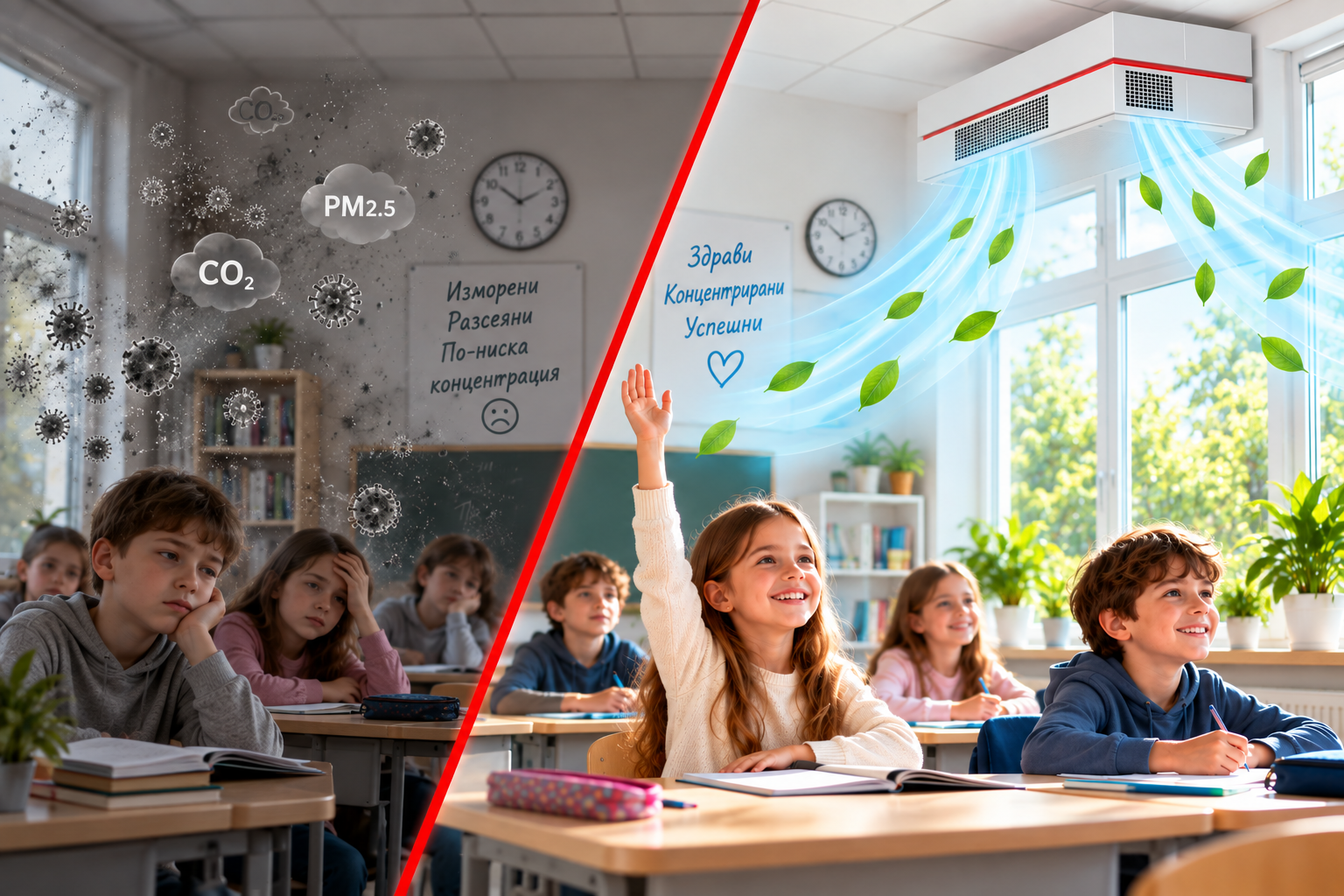
 Ventilation is much more than comfort – it is an essential part of creating a healthy indoor environment.
When we talk about air pollution, we usually think of road traffic, industry, and large cities. But the air we breathe inside buildings can be just as important for our health.
We spend a significant part of our daily lives in homes, offices, schools, kindergartens, commercial and public buildings. This is where various pollutants can gradually accumulate – particulate matter, volatile organic compounds (VOCs), formaldehyde, combustion by-products, allergens, mould, and others.
As the information from the European Lung Foundation in the accompanying infographic shows, the sources can be surprisingly diverse – from heating and cooking appliances and cleaning products to building materials, furniture, dampness, and pets.
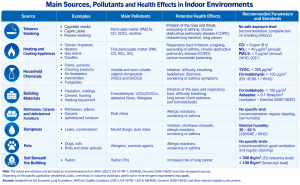
The problem is not always immediately noticeable
Poor indoor air quality can have both short-term and long-term effects. The first signs can sometimes be relatively subtle – dryness and irritation of the throat, coughing, headaches, a feeling of “stale” or stuffy air, or difficulty breathing.
Those who may be particularly sensitive include children, people with allergies or respiratory conditions, and anyone who spends long periods of time indoors.

That is why ventilation is much more than comfort
A properly designed mechanical ventilation system should continuously replace polluted indoor air with fresh, filtered outdoor air, remove excess moisture and odours, and limit the build-up of carbon dioxide (CO₂) and other pollutants.
And when the system incorporates high-efficiency energy recovery, it can provide the required amount of fresh air without unnecessarily high energy consumption.
“Good air in a building should not be noticed. It should simply be there – all the time.”
And that is precisely the role of modern ventilation.
For more information, explore TANGRA EVB heat recovery ventilation systems.


